 323 E. Bullard Ave., Ste. 102, Fresno, CA 93710
 559-439-9990

Choosing a dentist is about more than finding the closest office or the first name in a search result. The right dental team should help you feel heard, explain your options clearly, and provide care that supports your comfort, health, and long-term goals.
That decision can become especially important when you have missing teeth, damaged restorations, bite concerns, or a treatment plan that involves several procedures. Whether you need a routine evaluation or complex restorative care, knowing what to look for can make the process less stressful.
This guide explains how to evaluate a dentist in Fresno, CA, what questions to ask, and when a practice focused on prosthodontics may be appropriate.
This article provides general educational information and is not a substitute for an examination, diagnosis, or personalized treatment plan from a licensed dental professional.
Start With Your Current Dental Needs
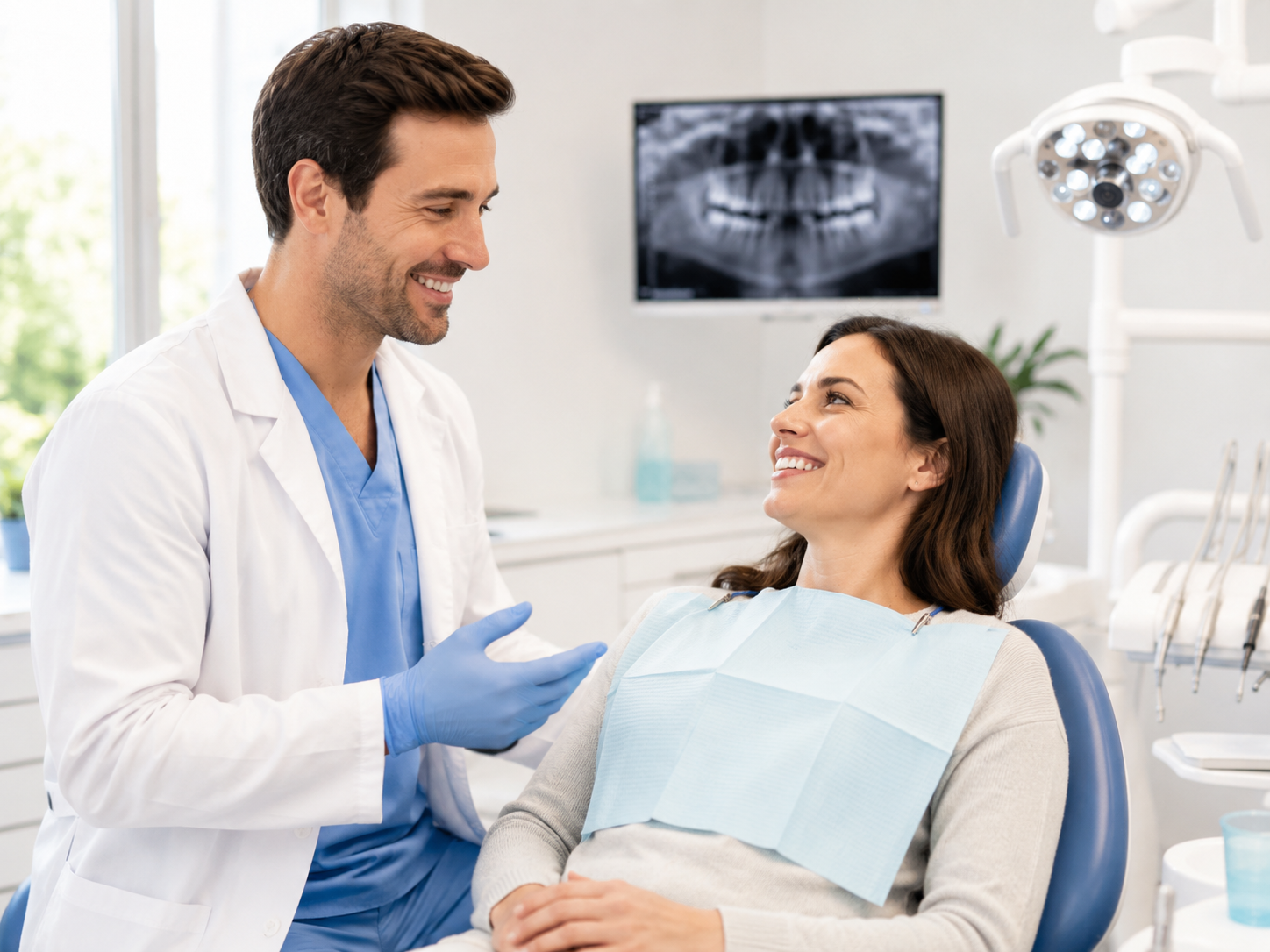
Before comparing dental offices, take a moment to consider why you are seeking care. Different practices may focus on different types of treatment, so identifying your priorities can help narrow the search.
A patient may be looking for help with:
- Preventive examinations and routine oral care
- A chipped, cracked, worn, or missing tooth
- Loose, uncomfortable, or aging dentures
- Dental implants or implant-supported restorations
- Multiple teeth that need repair or replacement
- Changes in the way the teeth come together
- The appearance, comfort, or function of an existing restoration
- A second opinion about a complex treatment plan
If your needs are straightforward, a general dental practice may be a suitable starting point. If several teeth are involved or tooth replacement is more complex, a practice with a restorative or prosthodontic focus may offer the type of detailed planning you need.
Understand the Difference Between General Dentistry and Prosthodontics
General dentists often provide preventive care, fillings, basic restorative treatment, and ongoing oral health support. They may also coordinate care with specialists when a patient needs more advanced treatment.
Prosthodontics focuses on restoring or replacing teeth to improve oral function, comfort, and appearance. A prosthodontic treatment plan may involve crowns, bridges, dentures, implant-supported prosthetics, or a coordinated full-mouth rehabilitation.
This does not mean every missing or damaged tooth requires specialist-level care. It means that patients with complicated restorative needs may benefit from a clinician whose practice centers on planning and creating dental prosthetics.
Fresno Prosthodontic Centre focuses on implant prosthodontics and full-arch rehabilitation for patients in Fresno and the Central Valley. An initial consultation can help determine whether that approach fits a patient’s needs.
Look for Care That Begins With a Thorough Evaluation
A thoughtful dental plan should begin with more than a quick look at one tooth. The dentist may review your concerns, dental history, current restorations, oral tissues, bite, and available diagnostic images. The exact evaluation depends on the reason for the visit.
This broader view matters because teeth do not function independently. A change to one tooth can affect how neighboring or opposing teeth meet. Existing restorations, available support, hygiene needs, and personal priorities may also influence which option makes sense.
Expect a conversation, not just a procedure list
A good consultation should give you room to describe what is bothering you. For example, a denture may look acceptable but move while eating. A crown may feel comfortable but no longer match nearby teeth. Another patient may care most about reducing the number of removable components in a restoration.
The dental team should listen to those details and explain which concerns treatment may address. When more than one option exists, patients should understand the practical differences rather than feeling rushed toward a decision.
Pay Attention to Communication and Comfort
Dental terminology can sound intimidating. A patient-friendly dentist should be able to explain the situation without relying on technical language alone.
During a consultation, consider whether the team:
- Asks about your concerns and desired outcome
- Explains findings in understandable terms
- Reviews reasonable alternatives when available
- Discusses the sequence of care
- Answers questions without making you feel hurried
- Explains fees and expected responsibilities before treatment
- Provides realistic expectations rather than guarantees
Comfort also includes emotional comfort. If you feel nervous about dental visits, tell the office when scheduling. This gives the team an opportunity to explain how appointments are handled and what accommodations may be available.
Ask How Technology Supports Treatment
Digital technology can assist with treatment planning, communication, and the design of restorations. However, the newest equipment is not automatically the most important factor. The real question is how the dental team uses its technology to make care more precise, efficient, or understandable.
Useful questions include:
- Will digital scans or conventional impressions be used?
- How will the restoration be designed?
- Where will the dental prosthetic be made?
- How are fit, bite, and appearance evaluated?
- Who can make adjustments if they are needed?
Fresno Prosthodontic Centre has an in-house, fully digital dental lab for its prosthetic and restorative treatments. Keeping laboratory work on-site can support direct communication between the dentist and laboratory team while allowing close attention to restoration details.
Evaluate the Entire Treatment Process
Patients sometimes compare dental options based only on the name of the procedure. It is equally important to understand the complete process, including preparation, temporary restorations, follow-up care, maintenance, and the final prosthetic result.
Implant treatment involves several distinct phases
If dental implants are part of a proposed plan, ask the dentist to explain each phase separately. Early symptom recovery after a procedure is not the same as soft-tissue healing. Soft-tissue healing is also different from osseointegration, the biological process through which an implant becomes supported by the surrounding bone.
Completion of the final restoration is another separate milestone. Its timing depends on the clinical plan, healing, implant stability, laboratory steps, and whether additional procedures are required. For that reason, one recovery estimate should not be assumed to represent the entire course of treatment.
Implant care also carries potential complications, and suitability must be assessed individually. Clinical evaluation and appropriate follow-up help the dentist monitor the implant and surrounding tissues. Published clinical literature describes possible implant-related complications and the importance of recognizing them appropriately. Patients can review an overview through this peer-reviewed clinical resource, but personal risk should always be discussed with the treating dentist.
Consider Prevention and Long-Term Maintenance
A restoration is not the end of dental care. Natural teeth, gums, implants, and dental prosthetics all require ongoing attention. The exact home-care methods and professional visit schedule depend on the type of restoration and the patient’s oral health.
Before beginning treatment, ask what maintenance will involve. Depending on the situation, the dental team may discuss cleaning around a prosthesis, caring for removable components, protecting the teeth from excessive force, or monitoring changes in fit and comfort.
Preventive care can also help the team identify concerns before they become more difficult to manage. Patients should contact their dentist if a restoration feels loose, the bite changes, chewing becomes uncomfortable, or the surrounding tissues become persistently sore.
Compare Value, Not Just the Initial Fee
Dental costs vary because treatment plans, materials, laboratory work, and individual needs vary. A lower initial fee does not necessarily include the same services, and a higher estimate does not automatically mean one plan is better.
When reviewing an estimate, ask whether it includes:
- Diagnostic records and treatment planning
- Preparatory procedures
- Temporary restorations, when needed
- The final restoration or prosthesis
- Laboratory fees
- Follow-up visits or adjustments
- Recommended maintenance
Insurance coverage and payment arrangements can also affect out-of-pocket costs. The office can explain its financial policies, but patients should confirm plan-specific benefits and limitations with their insurance provider. A written treatment plan can make comparisons clearer.
Questions to Ask a Dentist in Fresno, CA
Bringing a short list of questions can help you make the most of a consultation. Consider asking:
- What appears to be causing the current problem?
- What treatment options may be appropriate?
- What are the benefits, limitations, and important risks of each option?
- Is treatment urgent, or is there time to consider the choices?
- How many stages or appointments may be involved?
- Will temporary teeth or restorations be needed?
- Who will create the final restoration?
- What maintenance will be required afterward?
- What symptoms should prompt a call to the office?
- Can the practice provide a written plan and cost estimate?
The goal is not to test the dentist. It is to gather enough information to make a comfortable, informed decision.
Frequently Asked Questions
How often should someone visit a dentist?
The appropriate schedule depends on oral health, dental history, current restorations, and individual risk factors. A dentist can recommend a personalized interval after an evaluation rather than relying on one schedule for every patient.
When should a patient consider seeing a prosthodontist?
A prosthodontic consultation may be helpful when several teeth are damaged or missing, existing dentures or restorations are not functioning well, implants are being considered, or a patient wants another opinion about a complex restorative plan.
Does a consultation mean treatment must begin immediately?
No. A consultation is an opportunity to discuss concerns, review findings, and learn about possible next steps. Unless an urgent problem requires prompt attention, patients can usually ask questions and consider their options before proceeding.
Are dental implants right for everyone?
No single tooth-replacement option is appropriate for every person. Implant suitability depends on clinical findings, oral conditions, health history, available support, maintenance considerations, and personal goals. An examination is necessary before recommendations can be made.
What should a patient bring to a first appointment?
Helpful items may include identification, insurance information, a medication list, relevant health history, previous dental records or images if requested, and a list of questions. The office can confirm what is needed when the appointment is scheduled.
Find Dental Care That Fits Your Needs
The right dentist should combine careful evaluation, clear communication, appropriate technology, and respect for your goals. For patients considering implant-supported prosthetics, full-arch rehabilitation, or other complex restorative care, specialized planning may provide useful clarity.
Fresno Prosthodontic Centre welcomes patients at 323 E. Bullard Ave., Ste. 102, Fresno, CA 93710. To discuss concerns, ask questions, or determine whether a prosthodontic consultation is appropriate, contact the practice at 559-439-9990 or request an appointment through the practice website.